

Can You Install Plantation Shutters on Large Windows?
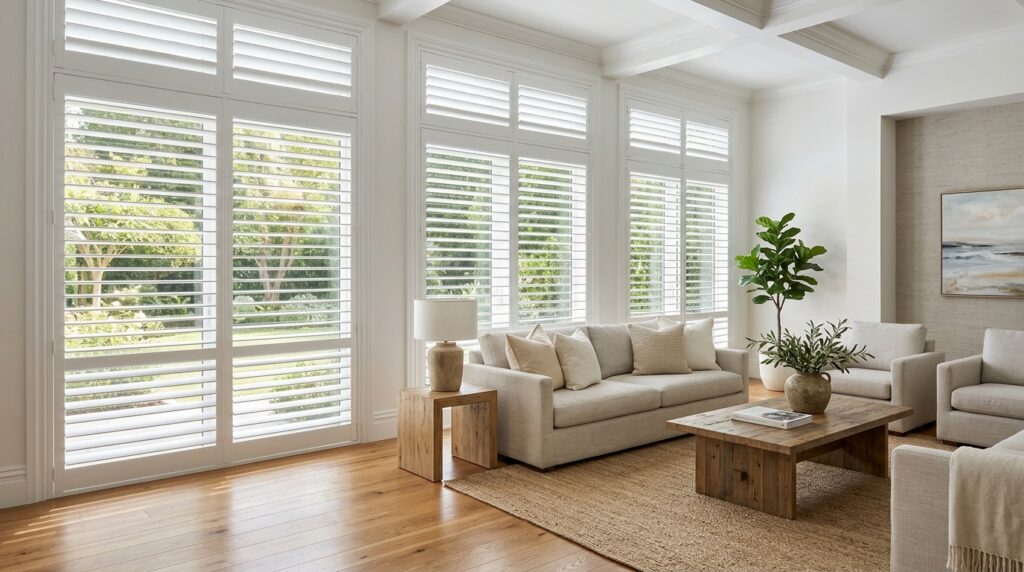
Expansive windows, sliding glass doors, and floor-to-ceiling glass walls are defining features of modern Australian architecture. They welcome natural light, capture outdoor views, and create a seamless sense of space. However, dressing expansive glass presents practical challenges around privacy, thermal insulation, light control, and long-term durability. If you are considering window coverings for wide or tall openings, you might wonder whether Plantation Shutters are suitable for large windows.
The short answer is yes. Plantation shutters are not only suitable for large openings, but they are also often one of the best choices available. Unlike fabric blinds that can flap in the breeze or curtains that gather dust and block airflow, shutters provide architectural structure, superior thermal performance, and precise light management. That said, installing shutters across substantial openings requires careful engineering, intelligent design choices, and correct material selection to prevent sagging, binding, or mechanical failure over time.
Key Engineering Considerations for Expansive Openings
As the width and height of a window opening increase, the physical demands on the shutter framework multiply. Understanding the structural factors involved helps ensure your plantation shutters for large windows remain functional and beautiful for decades.
Managing Shutter Weight and Panel Deflection
The primary challenge with large shutters is panel weight. When a shutter panel is wide, its weight exerts significant downward and lateral leverage on the side hinges and surrounding frame. If a panel is built beyond recommended engineering tolerances, it can cause the panel to drop, rub against the bottom sill, or pull the mounting frame out of square. Dividing a wide expanse into multiple hinged panels or integrating track support prevents this issue.
The Role of Divider Rails
For windows exceeding typical heights (generally over 1.8 metres), a divider rail (also known as a mid-rail) becomes essential. A divider rail is a solid horizontal timber or composite section integrated into the shutter panel. It serves two distinct purposes:
- Structural rigidity: It prevents the tall vertical side stiles from bowing inward or outward under tension and environmental changes.
- Independent louvre operation: It allows you to adjust the top louvres for daylight while keeping the bottom louvres closed for privacy from neighbours or street-level views.
Frame Selection and Structural Fixing
Large installations require robust framing to anchor the shutters securely into the wall studs or window reveal. An experienced installer will assess whether an Inside Mount (using an L-frame inside the reveal) or an Outside Mount (using an L-frame or Z-frame fixed to the architrave or surrounding plaster) offers the necessary structural backing. High-grade fixings are essential to distribute the weight across multiple anchor points along the wall.
Choosing the Right Material for Large Spans
Material density and strength-to-weight ratios are critical when choosing plantation shutters for large windows. Different materials behave differently across wide spans.
Lightweight Hardwood Timber
High-grade, lightweight timber is often considered the gold standard for large hinged shutter panels. Timber offers an exceptional strength-to-weight ratio, meaning individual panels can be built wider without placing excessive strain on the hinges. Timber also offers natural rigidity that resists warping over wide spans, making it ideal for tall living room windows and formal entertaining spaces.
Engineered Synthetic and PVC Shutters
Polymer or PVC shutters are highly durable, UV-stabilised, and completely moisture-resistant, making them ideal for bathrooms, kitchens, and wet areas. However, synthetic materials are considerably heavier than natural timber. When using PVC on larger windows, internal aluminium core reinforcement within the stiles and louvres is necessary to maintain stability and prevent drooping. Because of the added weight, individual PVC panels typically have narrower maximum width limits than timber panels.
Aluminium Shutters
For external large spans, alfresco areas, or expansive balcony enclosures, aluminium shutters provide unmatched strength, weather resistance, and security. Aluminium allows for very wide individual panels that withstand wind loads without warping or bending.
Mounting Configurations: Hinged vs Tracked Systems
The way your shutters open and close dictates both their usability and longevity across large glass areas.
Standard Hinged Configurations
For moderately wide windows, traditional hinged panels work well. Panels can be configured as singles, pairs, or bi-fold pairs hinged together. For very wide spans, relying entirely on hinges can lead to panels swinging out far into the room, occupying usable floor space when open.
Tracked Bi-Fold Systems
Bi-fold tracked systems hang from a top track and glide smoothly along a bottom guide channel. When opened, the panels fold back neatly against the side walls like a concertina. This configuration is widely used for large sliding patio doors, French doors, and expansive living room openings because the overhead track supports the full weight of the panels, eliminating hinge sag entirely.
Tracked Sliding (Bypass) Systems
Tracked bypass systems feature panels that slide past one another on parallel top tracks. This setup is particularly effective for sliding glass doors where space in front of the window is restricted. Because the panels slide sideways rather than folding into the room, furniture can be placed closer to the window without obstructing shutter movement.
Aesthetic Proportions and Louvre Sizing
Scale and proportion matter when dressing expansive windows. Installing small louvre blades on a massive window can create a cluttered, cage-like appearance. Conversely, larger louvre blades complement large spaces by enhancing lines of sight and maximizing natural airflow.
- 89mm Louvres: The most popular size in contemporary homes. They balance excellent outward visibility with proportional elegance on medium to large windows.
- 114mm Louvres: Ideal for floor-to-ceiling glass and expansive views. The wider spacing between louvres allows maximum daylight to enter while creating a bold, modern architectural look.
Why Custom Measurement and Professional Installation Matter
Large window openings are rarely perfectly square. In Australian homes, settling foundations, plaster variations, and temperature fluctuations often cause minor discrepancies in window width and height from corner to corner. A variation of even 4 or 5 millimetres across a three-metre opening can cause standard or prefabricated panels to stick or gap noticeably.
Custom-measured shutters are tailored down to the exact millimetre. Professional fitters use laser measuring tools, check for diagonal squareness, and calculate panel weights to select appropriate hinge spacing, track depths, and frame clearances. This precision guarantees seamless operation, tight light closure, and long-lasting structural integrity.
Frequently Asked Questions
How wide can plantation shutter panels be?
Individual panel widths typically range from 600mm to 950mm, depending on the material chosen. Lightweight timber panels can generally span wider than solid PVC panels. When covering windows wider than these limits, multiple panels are combined using bi-fold hinges, T-posts, or overhead track systems to span any total width seamlessly.
What shutter material is best for large windows?
Premium lightweight timber is generally the best choice for large indoor windows due to its high strength-to-weight ratio. For wet areas or external alfresco spaces with large openings, aluminium-reinforced synthetic panels or structural aluminium shutters are recommended.
Do large shutters sag over time?
Properly engineered shutters do not sag. Sagging only occurs when panels are built wider than manufacturer specifications, when heavy materials are used without track support, or when frames are poorly secured to the wall framing. High-grade hardware and correct panel-to-frame ratios eliminate sagging.
Are tracked shutters better for wide openings?
Yes. For openings wider than 2.5 to 3 metres—such as sliding glass doors or wall-to-wall glass—top-tracked systems (either bi-fold or sliding bypass) are significantly better. The track carries the panel weight smoothly and prevents excessive lateral stress on side hinges.
Can plantation shutters cover floor-to-ceiling windows?
Yes, plantation shutters work exceptionally well for floor-to-ceiling windows. Taller installations incorporate one or two divider rails to reinforce the stiles, prevent panel warpage, and allow flexible, independent light control between the top and bottom sections.