
Do Plantation Shutters Provide Privacy at Night?
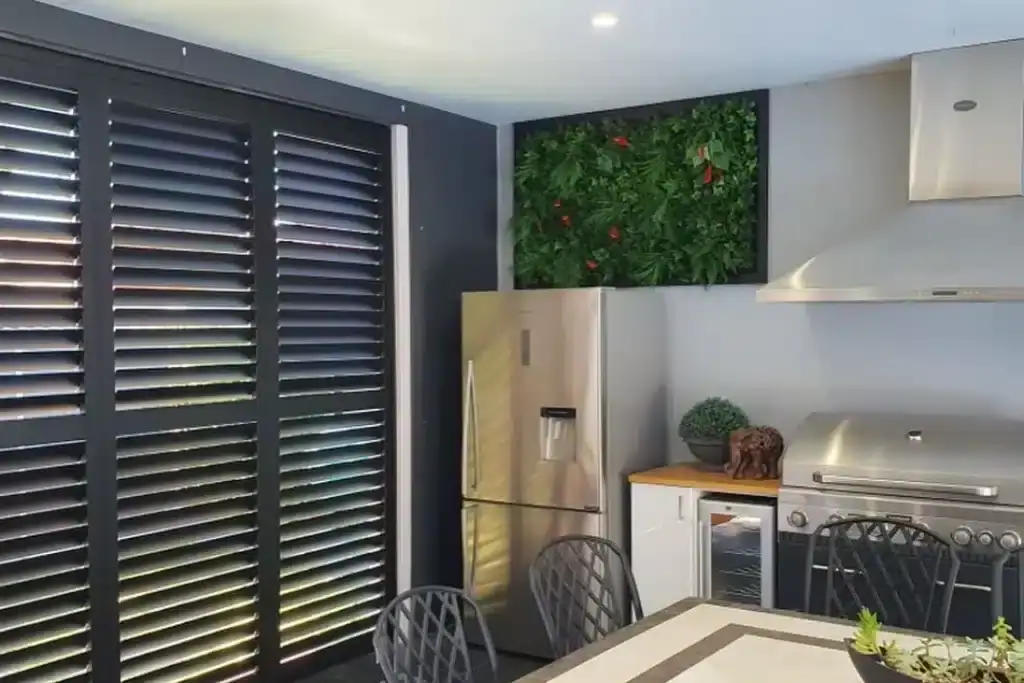
Yes, plantation shutters provide exceptional privacy at night, but their effectiveness depends entirely on how you position the louvres (blades). When the louvres are fully closed, high-quality Plantation Shutters create a solid physical barrier that blocks outside view completely, preventing anyone from seeing into your home.
However, when the louvres are partially open or tilted, night-time privacy changes. Unlike during the day—when brighter outdoor light creates a natural one-way reflective barrier—indoor lighting at night makes your rooms brighter than the outside world. Anyone standing outside in the dark can potentially see inside between open blades if the angle and viewing height align. Understanding how light, viewing angles, and blade positions interact ensures you keep your home completely private once the sun goes down.
Why Night-Time Privacy is Different from Daytime Privacy
To understand how window coverings work at night, it helps to understand the contrast in lighting conditions between day and night:
- During the day: Natural sunlight outside is significantly brighter than your indoor lighting. Louvres can be tilted horizontally or slightly angled to let light flood into the room while still making it difficult for passersby on the street to look in.
- At night: The dynamic reverses. With overhead lights, lamps, or television screens turned on inside and darkness outside, your interior becomes illuminated like a stage. If there is a direct line of sight through open louvres, people outside will have a clear view indoors.
Because of this contrast, simply leaving louvres resting in a horizontal position is usually not enough for complete evening privacy, especially for street-facing rooms or bedrooms.
How to Angle Louvres for Maximum Privacy
The direction you tilt your shutter blades determines what someone standing outside can see. Depending on whether your windows are at ground level or on an upper floor, adjusting the angle correctly will block external sightlines while still allowing air to circulate.
Ground-Floor Windows: Tilt Louvres Upwards
For ground-level rooms facing a street, footpath, or neighbouring fence, tilt the louvres so the front edge points upwards towards the ceiling. When blades are angled upward:
- Passersby looking in from street level will only see the ceiling of your room.
- The direct line of sight to furniture, living areas, and occupants is blocked.
- Warm air can still circulate through the window if it is open behind the shutter panels.
Upper-Storey Windows: Tilt Louvres Downwards
If your windows are on the second storey or higher, the sightline from the street comes from below. In this scenario, tilting the louvres with the front edge pointing downwards towards the floor prevents people at ground level from looking up into your room. Anyone looking up will only see the underside of the blades or the floor area directly next to the window.
Full Closure for Complete Seclusion
For rooms where complete privacy is non-negotiable—such as bedrooms, bathrooms, and ensuites—closing the louvres completely upwards or downwards creates total privacy. Because plantation shutters fit flush within or around the window frame, they eliminate the side gaps and silhouettes commonly associated with fabric blinds.
Using Split Tilt and Mid-Rails for the Best of Both Worlds
One of the most practical features available for custom window shutters is split tilt functionality or the addition of a horizontal divider rail (mid-rail). These design options allow you to operate the top and bottom sections of the shutter louvres independently.
- Bottom section closed: Keeps the lower half of the window completely private, blocking direct sightlines from footpaths, driveways, or adjacent properties.
- Top section open: Allows natural daylight or moonlight to enter the room, maintains your view of the sky or treetops, and supports natural airflow through open windows.
This configuration is particularly popular in Australian homes for ground-floor living areas, street-facing master bedrooms, and bathrooms where privacy is essential but natural light is still desired.
Plantation Shutters vs Other Window Coverings at Night
When comparing night-time privacy across popular window treatments, plantation shutters offer distinct advantages over fabrics and flexible blinds.
Shutters vs Roller Blinds
Standard roller blinds can leave gaps around the edges where light escapes and sightlines remain open. Sunscreen (mesh) roller blinds provide excellent daytime privacy but become completely transparent at night when indoor lights are switched on. In contrast, solid timber or polymer shutters completely obscure indoor shapes, shadows, and movement when closed.
Shutters vs Venetian Blinds
While venetian blinds also feature tilting horizontal slats, their lightweight aluminium or thin timber slats often flex, hang unevenly, or leave noticeable gaps around the cords and edges. Plantation shutters feature rigid frames and wider, engineered louvres that interlock more tightly, offering superior structural stability and visual coverage.
Shutters vs Curtains
Sheer curtains offer daytime privacy but no night-time protection once interior lighting is active. Heavy blockout drapes do provide complete privacy at night, but they completely cut off ventilation and cannot be fine-tuned to balance partial light and privacy like shutter blades can.
Frequently Asked Questions
Can people see through plantation shutters at night?
If your plantation shutters are fully closed, people cannot see through them at night. There are no transparent materials or loose fabric edges to peek through. If the louvres are left wide open horizontally and your indoor lights are on, people outside will be able to see inside. Simply tilting the blades or shutting them completely solves this issue.
Which way should shutter louvres face for privacy?
For standard ground-floor windows, tilt the front edge of the louvres upward toward the ceiling. This directs the sightline of anyone walking past up toward the ceiling rather than into your living space. For upper-level windows, tilt the louvres downward to block the view from street level below.
Can you have privacy and daylight at the same time?
Yes. By tilting the louvres slightly upward, you can bounce natural daylight off the blades and onto the ceiling—brightening the entire room—while simultaneously blocking the horizontal sightline from outside. Shutters equipped with a split tilt mechanism or a divider rail make this even easier by allowing the bottom louvres to stay closed while the top louvres remain open.
Are shutters more private than blinds?
Generally, yes. Because plantation shutters are custom-built into a solid frame fitted directly to your window reveal, they do not swing in the breeze or leave wide light gaps along the edges. Their rigid construction prevents the bending and warping that can create visible gaps in standard flexible blinds.
Do cafe-style shutters provide enough night privacy?
Cafe-style shutters cover only the lower half of the window. While they offer excellent privacy at ground level during the day, the exposed upper glass may compromise your privacy at night if indoor lights are on and neighbouring homes or taller buildings overlook your property. For full night-time privacy, cafe-style shutters are often paired with a secondary covering, such as curtains, on the upper section.
Summary
Do plantation shutters provide privacy at night? Absolutely. When closed, their sturdy construction and tight-fitting blades offer total protection from prying eyes. By mastering blade angles and taking advantage of split tilt designs, you can easily control your home’s privacy, airflow, and ambience at any hour of the day or night.