

Inside Mount vs Outside Mount Plantation Shutters: Which Is Better?
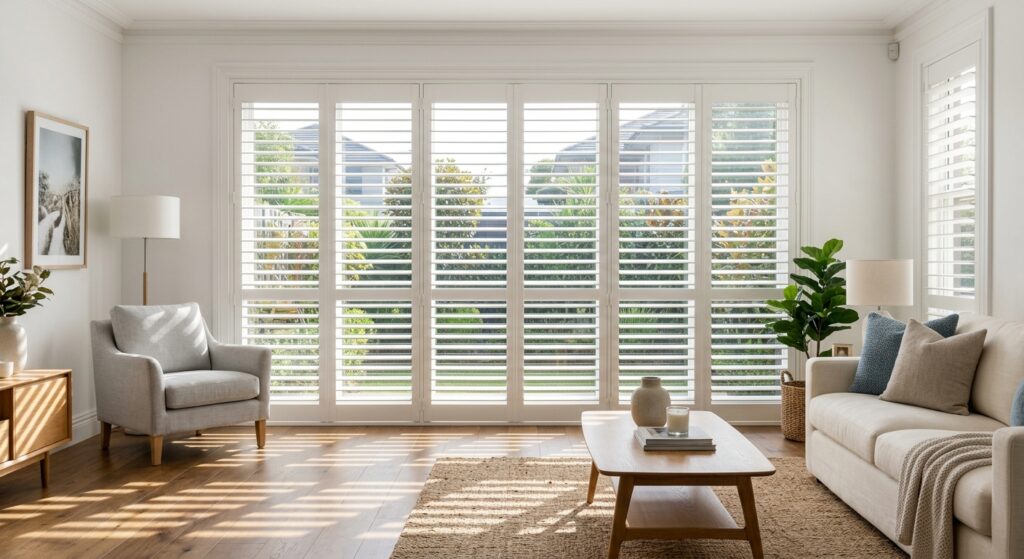
When selecting custom window coverings for your home, deciding between inside mount vs outside mount plantation shutters is one of the most important structural choices you will make. Homeowners often ask which option is “better”, but in reality, neither method is universally superior. The ideal choice depends entirely on your window’s architectural features, including reveal depth, window handles, architraves, and your aesthetic goals.
Both mounting methods deliver exceptional durability, thermal insulation, and light control when fitted correctly. Understanding the practical differences between an inside fit and an outside fit ensures your custom Plantation Shutters operate smoothly and look balanced within your living space.
What Is an Inside Mount Plantation Shutter?
An inside mount (often referred to as an internal or reveal mount) fits the shutter frame entirely inside the recessed opening of your window frame. The shutter sits flush or semi-flush with the surrounding wall or timber architrave, blending seamlessly into the existing architectural lines.
Advantages of an Inside Mount
- Clean, integrated aesthetic: Because the frame sits within the recess, it creates a tailored, built-in appearance that complements modern and minimalist interior styles.
- Preserves decorative trim: If your home features heritage architraves or ornate timber work around the window, an inside mount leaves these decorative details visible.
- Space-saving design: The shutters do not protrude past the wall line, making them ideal for tight spaces, hallways, or rooms where furniture sits close to the window.
Limitations to Consider
- Depth requirements: The louvres need sufficient clearance to rotate fully without hitting the window glass, locks, or handles.
- Out-of-square openings: If your window reveal is significantly out of square, an inside mount requires precise framing or filler strips to prevent uneven light gaps.
What Is an Outside Mount Plantation Shutter?
An outside mount (sometimes called a face mount) attaches the shutter frame directly onto the surrounding architrave or onto the structural wall outside the window opening. The shutter panel sits completely forward of the window recess, covering the entire opening like a picture frame.
Advantages of an Outside Mount
- Solves shallow reveal issues: Outside mounts eliminate depth limitations entirely, making them suitable for windows with little to no recess.
- Clears window hardware: Bulky winder mechanisms, handles, security locks, or centre mullions can sit freely behind the shutter panels without obstructing louvre movement.
- Disguises irregular openings: If your window reveals are uneven or out of square, mounting the frame to the face of the wall or trim conceals structural flaws cleanly.
- Enhanced edge light control: Because the frame overlaps the wall or trim, edge light bleed can be reduced significantly compared to tight inside fits.
Limitations to Consider
- Room projection: Outside mount frames project forward into the room by a few centimetres, which may affect nearby furnishings or narrow walkways.
- Covers existing architraves: If fitted directly to the face of existing timber trim, the shutters will conceal the original moulding.
Key Factors to Consider Before Choosing
To determine whether an inside mount or outside mount is appropriate for your windows, assess the following five critical factors:
1. Reveal Depth
The “reveal” is the depth of the window recess measured from the front edge of the wall or architrave back to the glass. Different louvre sizes (such as 63mm, 89mm, or 114mm) require varying amounts of operational clearance. An inside mount typically requires a clear depth of 60mm to 90mm, depending on the blade size and frame profile chosen. If your reveal is shallower than the minimum requirement, an outside mount is usually necessary.
2. Handles, Latches, and Winders
Casement windows, awning windows, and double-hung windows often feature projecting hardware such as chain winders, cam handles, or sash locks. When measuring inside depth, you must measure from the face of the innermost obstruction (the handle tip) rather than the glass. If hardware projects too far forward, an outside mount provides the required clearance without modifying the window.
3. Architrave and Trim Profile
Examine the trim surrounding your window. Square-set plaster reveals without timber mouldings are naturally suited to inside mounts or face mounts with specialised L-frames. If you have flat timber architraves, an outside mount can be fastened directly to the timber face. However, heavily contoured or bullnose architraves may require an inside mount or an outside mount that sits beyond the trim on the drywall.
4. Light Bleed and Privacy Requirements
While all quality plantation shutters provide excellent privacy and light management, the mount style slightly influences perimeter light. Inside mounts leave a small manufacturing tolerance gap (usually a couple of millimetres) between the shutter frame and the window frame, which is sealed with caulking. Outside mounts overlap the window opening, which can reduce direct edge light entry in bedrooms and media rooms.
5. Window Squareness
Settling in older homes or natural movement in new builds often causes window frames to become slightly trapezoidal or bowed. Inside mounts highlight severe out-of-square conditions if the reveal varies by more than 8–10mm across the width or height. Outside mounts bypass internal wall irregularities by securing to the flat exterior plane.
Scenario Guide: Which Mount Works Best?
- Modern plaster reveals with 80mm+ clear depth: Choose Inside Mount. This delivers a clean, architectural finish that sits flush with the plasterboard.
- Awning windows with bottom chain-winders: Choose Outside Mount. The frame sits forward, allowing you to operate the winder handle freely behind the shutter panels.
- Shallow reveals (under 50mm depth): Choose Outside Mount. It eliminates the risk of louvre blades colliding with the window glass during rotation.
- Rooms with tight clearance to nearby cupboards or doors: Choose Inside Mount. Keeping the shutter contained inside the recess prevents it from striking adjoining furniture or doors.
- Heritage homes with detailed decorative architraves you wish to display: Choose Inside Mount. This preserves the visibility of your period timber moulding.
Frequently Asked Questions
What is an inside-mount plantation shutter?
An inside-mount shutter is fitted directly within the recessed window reveal. The frame and panels sit inside the structural opening, resulting in a streamlined, flush finish that keeps your surrounding walls and architraves visible.
When do shutters need an outside mount?
Shutters require an outside mount when the window reveal lacks sufficient depth for louvre rotation, when protruding handles or winders block internal frames, or when the window opening is significantly out of square.
Do outside-mount shutters block more light?
Outside-mount shutters can reduce perimeter light bleed because the frame overlaps the outside edges of the window opening. This overlap covers small gaps that might otherwise allow light to pass around the edges of an inside-mounted frame.
Can shutters be fitted to shallow window reveals?
Yes. If your reveals are too shallow for an inside mount, an outside mount can be fixed directly onto the architrave or surrounding wall. Alternatively, low-profile Z-frames or build-out frames can sometimes be used to facilitate semi-recessed installations.
Which mount looks more built in?
An inside mount generally provides a more built-in, architectural look because the panels sit flush within the window frame. However, an outside mount with an integrated decorative frame profile can also look like an intentional, stylish extension of your home’s timber moulding.