

Understanding Plantation Shutter Louvre Size
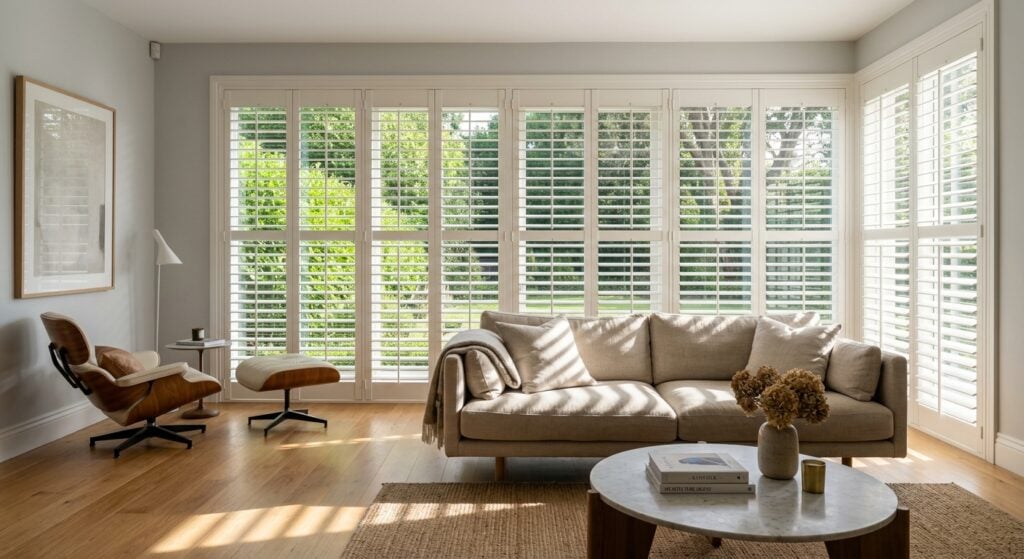
When designing custom window coverings, selecting the right plantation shutter louvre size is one of the most critical decisions you will make. The louvres—the horizontal blades that tilt open and closed—define not only how your shutters look from inside and outside your home, but also how they function day-to-day.
Choosing high-quality Plantation Shutters allows you to tailor blade width to suit your window dimensions, interior architecture, and lifestyle needs. The width of the blade directly influences light entry, airflow, privacy, view-through, and cleaning effort. Understanding how blade dimensions impact your space will help you choose the best option for every room in your home.
How Louvre Size Changes the Look and Function of a Room
The scale of the shutter blade affects both aesthetics and performance. Here is how blade width alters key aspects of your living environment:
Number of Horizontal Lines and Visual Weight
Each shutter panel has a fixed height. Smaller louvres require more blades to cover that height, resulting in a higher number of horizontal lines across the window. Conversely, wider louvres mean fewer blades are needed per panel.
- Narrower louvres: Create a detailed, textured, and traditional appearance. The denser pattern of horizontal lines can make a window look busy if used on very large spans, but it adds charm and character to smaller, vintage-style frames.
- Wider louvres: Provide an uncluttered, minimalist finish. Fewer horizontal lines create an open, modern aesthetic that allows the window frame and the view beyond to take centre stage.
Outside View and Outlook
If you have an attractive garden, pool, or scenic vista, louvre size plays a significant role in your view. When fully tilted open horizontally, the physical thickness and spacing of the blades determine how much of your view is interrupted.
Larger blades sit further apart when open, providing wider gaps and a clearer, less obstructed line of sight outdoors. Narrower blades sit closer together, meaning more of your view is divided by horizontal lines.
Natural Light Control and Airflow
Both wide and narrow louvres allow you to adjust the angle of incoming daylight, directing sunlight upward toward the ceiling or downward toward the floor to protect furniture from UV exposure. However, when louvres are opened fully perpendicular to the window frame, wider blades allow more direct sunlight and maximum cross-ventilation because there is less surface area impeding light and air.
Day and Night Privacy
When completely closed, well-fitted shutters of any louvre size provide excellent privacy and room darkening. The difference arises when louvres are partially tilted during the day:
- Narrower louvres offer tighter viewing angles from outside, making it easier to balance natural ambient light with street-level privacy.
- Wider louvres offer broader visibility between blades, which means people outside may find it easier to see inside if the shutters are tilted slightly open at eye level.
Choosing the Right Shutter Louvre Size for Your Home
There is no single “best” louvre width for every property. The ideal choice depends on your window dimensions, architectural style, and the practical requirements of each room.
Small Windows vs Large Openings
Window scale is often the deciding factor when balancing proportion:
- Small or Narrow Windows: Compact windows—such as those found in powder rooms, heritage cottages, or narrow hallway sidelights—often suit smaller to mid-sized louvres. Oversized blades on very short windows can look out of scale, as the panel may only accommodate a few blades.
- Large Windows, Sliding Doors, and Bi-Folds: Floor-to-ceiling windows, sliding patio doors, and expansive living room openings benefit significantly from larger louvre sizes. Large blades maintain a clean, proportionate aesthetic across broad expanses of glass without creating an overly busy pattern.
Traditional vs Contemporary Interiors
Your interior décor should guide your choice of blade profile:
- Traditional, Colonial, and Heritage Homes: Smaller to medium blade widths complement classic architraves, federation detailing, and traditional furnishings. They reflect the authentic historical styling of early colonial shutters.
- Modern, Coastal, and Minimalist Homes: Contemporary architectural styles favour wide blades. The clean lines and unobstructed view suit open-plan living, coastal themes (such as modern Hamptons or Scandinavian design), and sleek, minimalist interiors.
Room Function
Consider what happens in each room throughout the day:
- Living and Dining Areas: Larger blades are generally preferred to maximise natural daylight and maintain an open connection to outdoor entertainment spaces.
- Ground-Floor Bedrooms and Bathrooms: Medium-sized blades are often chosen where windows face footpaths, neighbouring properties, or driveways, allowing you to angle the blades for light without sacrificing personal privacy.
- Maintenance and Cleaning: Larger louvres mean fewer individual blades per window, reducing the time spent dusting and wiping down shutters throughout the home.
Overview of Standard Louvre Categories
While custom manufacturers offer specific millimetre variations, shutter louvres generally fall into three broad categories:
- Small Louvres: Ideal for compact windows, heritage restorations, French doors, or spaces where dense privacy is paramount.
- Medium Louvres: The most versatile option. Medium blades strike a balance between traditional charm and modern light control, making them suitable for almost any standard residential window.
- Large Louvres: Best suited to contemporary homes, expansive glass openings, alfresco enclosures, and rooms where maximising the outdoor view is the primary goal.
Frequently Asked Questions
Are bigger plantation shutter louvres better?
Bigger louvres are not necessarily better, but they are increasingly popular in modern design. Larger louvres offer a cleaner look, fewer horizontal lines, easier cleaning, and an enhanced view outdoors. However, smaller louvres are often better suited to traditional architectural styles and compact window frames where larger blades would look disproportionate.
Which louvre size gives the best view?
Larger louvre sizes provide the clearest, most unobstructed view. Because the blades are spaced further apart, there are fewer physical louvres across the window when opened horizontally, creating wider sightlines to the outside.
Do larger louvres let in more light?
Yes. When fully opened horizontally, larger louvres allow more natural daylight to enter the room because there are fewer blades obstructing the glass area. When closed, both large and small louvres block out light with equal effectiveness.
What louvre size suits small windows?
Small or narrow windows typically look best with small to medium-sized louvres. If a louvre is too large for a short window, the panel will contain very few blades, making the shutter look out of proportion with the window frame.
Does louvre size affect privacy?
When fully closed, all louvre sizes provide complete privacy. When tilted open to allow daylight in, smaller louvres provide slightly more privacy because the narrower gaps restrict the viewing angle from the outside. Wider louvres offer broader visibility between the blades, requiring careful tilting on ground-floor windows facing the street.