
Plantation Shutters vs Venetian Blinds: What Is the Difference?
When updating your window coverings, deciding between plantation shutters and Venetian blinds is one of the most common dilemmas. At first glance, both window treatments share a similar design concept: horizontal slats that tilt to manage light, airflow, and privacy. However, the way they are engineered, installed, and operated creates very distinct experiences in terms of aesthetics, longevity, and everyday performance.
Whether you are renovating an entire Australian home or refreshing a single room, understanding the core differences between Plantation Shutters and Venetian blinds will help you select the ideal treatment for your lifestyle, budget, and interior style.
Core Structural Differences: Framed Panels vs Suspended Slats
The primary difference between the two treatments lies in their physical structure and installation method.
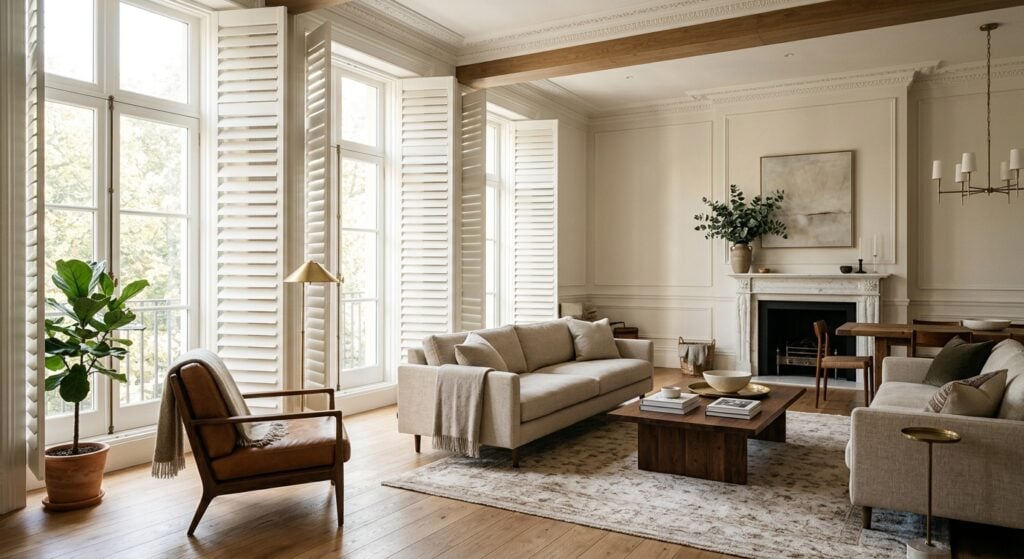
Plantation Shutters are permanent architectural fixtures. They consist of a solid outer frame fitted directly into or around the window reveal. Within this frame, sturdy operable panels hold wide horizontal louvres (typically ranging from 63mm to 114mm). Because the panels are mounted on hinges, bi-folds, or sliding tracks, they swing or glide open like doors, creating a seamless, built-in appearance.
Venetian Blinds are suspended window coverings. They feature smaller, flexible horizontal slats (typically 25mm to 50mm) held together by durable cords or fabric tapes. The entire blind hangs from a top headrail and can be tilted open or drawn completely up to the top of the window frame using a cord, wand, or cordless mechanism.
Key Feature Comparisons
1. Light Control and Privacy
Both styles excel at controlling natural light and daytime privacy, but they achieve this differently:
- Plantation Shutters: Wider louvres allow generous amounts of natural daylight into the room while maintaining a clear view outside. When fully closed, the interlocking louvres and fitted perimeter frame block out ambient light and eliminate side gaps, providing exceptional privacy and effective room darkening.
- Venetian Blinds: Because the slats are narrower and closer together, they offer precise micro-adjustments for filtering harsh sunlight. However, even when closed, small amounts of light may filter through the cord route holes and the edges where the blind meets the window reveal.
2. Durability and Longevity
Durability depends heavily on the materials used, but the structural design plays a major role:
- Shutters: Built from robust timber, premium aluminium, or engineered polymer composites, plantation shutters are designed to last for decades. They do not have dangling cords, delicate mechanisms, or flexible slats that can bend, warp, or tangle over time.
- Venetian Blinds: Modern aluminium, faux-wood, and timber Venetians are tough and resilient against everyday use. However, the suspension cords, tilt mechanisms, and thinner slats are naturally subjected to tension and friction during regular raising and lowering, meaning they may require cord maintenance over their lifespan.
3. Cleaning and Maintenance
Ease of cleaning is often a deciding factor for busy households:
- Plantation Shutters: Because the louvres are wide, thick, and rigidly held in place, wiping them down with a microfibre cloth, duster, or damp sponge is fast and straightforward. They do not shift or rattle under hand pressure.
- Venetian Blinds: Narrower slats mean more individual surfaces to dust. Cleaning requires a lighter touch, as thin aluminium or timber slats can flex when pressed. Specialised multi-slat dusting tools make the process quicker, but regular maintenance takes slightly more care.
4. Day-to-Day Operation and Usability
Consider how frequently you open your windows or want an unobstructed view outside:
- Shutters: Louvres are adjusted effortlessly using a hidden clearview mechanism or a traditional central tilt rod. To access the window latch for fresh air, you simply swing or slide the panel open. Ensure you have adequate clearance in front of the window for hinged panels to open into the room.
- Blinds: Venetians can be drawn up completely to expose the entire pane of glass. However, lifting heavy timber blinds on wide windows requires some physical effort, which is why wider openings are often split into multiple smaller blinds.
5. Thermal Insulation and Energy Efficiency
Managing heat transfer through glass is essential in Australian climates:
- Shutters: The custom-fitted perimeter frame creates an insulating air pocket between the shutter panel and the window glass. This barrier significantly reduces heat gain in summer and heat loss during winter, helping regulate room temperature.
- Blinds: While Venetian blinds reflect radiant sunlight effectively, they do not create a sealed barrier around the frame, allowing some air movement around the sides and bottom.
6. Cost and Investment
Budget often defines which option works best across an entire property:
- Shutters: Considered a long-term capital improvement, plantation shutters represent a higher upfront investment. In return, they offer exceptional durability, energy savings, and tangible value to your home’s resale appeal. For more insights on styles and materials, explore our plantation-shutters resource section.
- Blinds: Venetian blinds are an affordable, practical solution that delivers the classic horizontal-slat look across a wide variety of budgets. They are ideal for rental properties, quick updates, or homes where you want versatile light control without a major financial outlay.
Choosing the Best Option for Each Room
Because both products bring unique advantages, many homeowners combine both treatments across different areas of their home:
When Plantation Shutters Are the Best Choice:
- Front-facing windows where maximum curb appeal and security are desired.
- Living rooms, master bedrooms, and dining areas where a premium, architectural look is preferred.
- Moisture-prone areas like bathrooms and laundries (using water-resistant polymer or aluminium shutters).
- Large or uniquely shaped windows, such as arches and bay windows.
When Venetian Blinds Are the Best Choice:
- Secondary bedrooms, study nooks, or home offices where functional light filtering is needed on a modest budget.
- Windows with restricted clearance where swinging shutter panels cannot open freely.
- Rental properties or renovation projects requiring an immediate, cost-effective update.
- Narrow window openings where wide shutter frames might reduce visible glass area.
Frequently Asked Questions
What is the main difference between shutters and Venetian blinds?
The main difference is the structural design. Plantation shutters are rigid, framed panels with wide louvres permanently mounted to the window reveal. Venetian blinds are flexible slats suspended by cords from a top headrail that can be raised and lowered vertically.
Which is more durable?
Plantation shutters are generally more durable. With solid framing, robust louvres, and no delicate cords or internal pulleys, they are built to withstand heavy daily use and resist long-term wear better than suspended blinds.
Which is easier to clean?
Plantation shutters are easier to clean. Their wider, fixed louvres provide a stable surface that can be wiped down quickly with a cloth. Venetian blinds have narrower, flexible slats that require gentle handling during dusting.
Do shutters provide better privacy than Venetian blinds?
Yes. Because plantation shutters sit inside a fitted outer frame, they eliminate light gaps around the edges of the window. When the louvres are closed, they provide a more complete block against outside visibility than hanging blinds.
Which works better on large windows?
Plantation shutters are often better suited to wide expanses, patio doors, and sliding glass doors because they can be configured with bi-fold or multi-track sliding panels. Lifting very large, heavy Venetian blinds can strain both the operating cords and the user, making multiple smaller blinds necessary for wide windows.